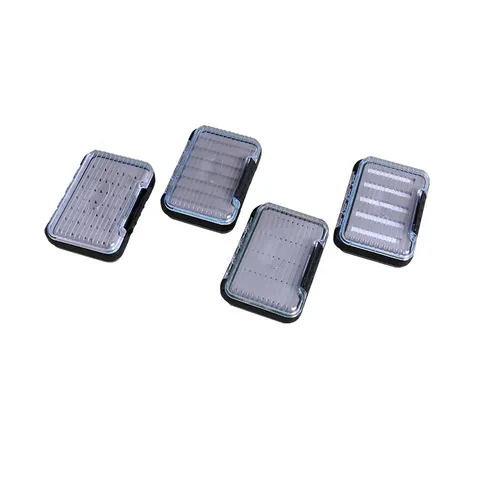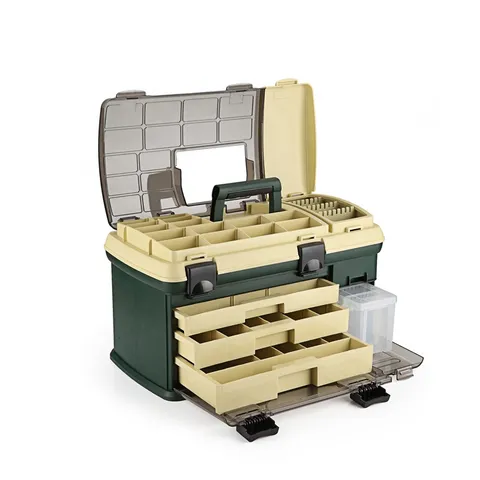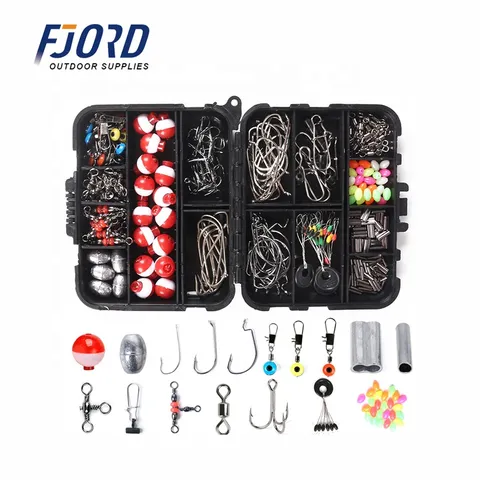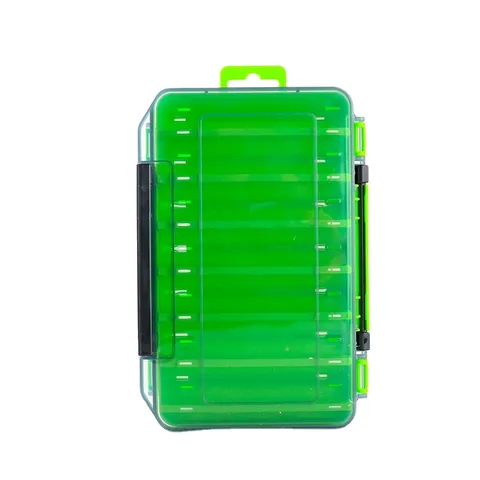
Match box size to how your customer actually fishes
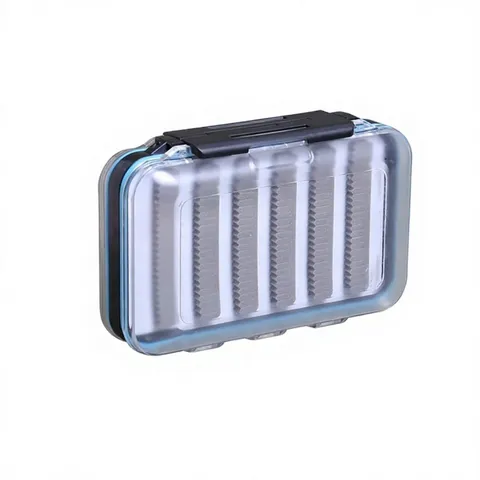
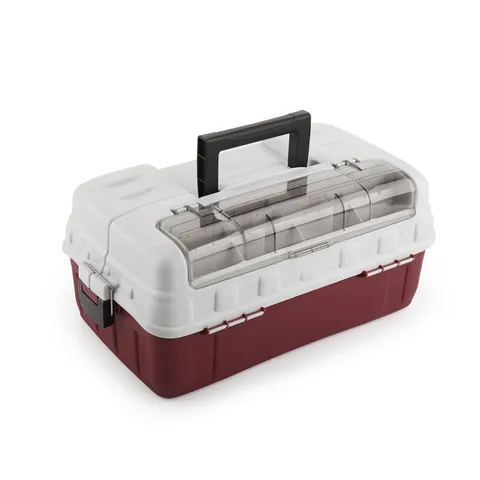
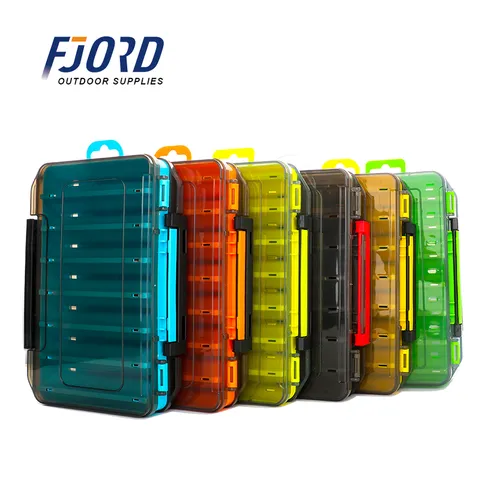
The most common buying error is stocking one mid-size box and assuming it covers the market. It does not. A shore angler walking to a mark wants a compact box that fits a rucksack; a boat angler wants a large, stackable unit that stays put in a locker; a match angler wants a shallow tray system with fast access to many small compartments.
Map your range to two or three of these use cases rather than to price points. A compact box and a large stackable box cover most of the market; a third mid-size option fills the gap for anglers who do both.
The latch and seal are the first thing to fail
Ask any angler what went wrong with their last box and it is almost always the latch or the lid seal. Latches fail because the moulded clip is under-sized for the lid length, and seals fail because the gasket compresses permanently and never recovers. Both are visible in a sample if you know to test them.
Cycle the latch on a sample unit fifty times before approving it, and compress the seal overnight to see whether it recovers by morning. These two checks take minutes and eliminate most of the returns in this category.
- Cycle-test the latch — a clip that feels stiff on day one will crack in year two.
- Compress the gasket overnight and check recovery; a seal that stays flat will leak.
- Confirm the lid stays shut when the box is dropped from waist height, loaded.
Dividers: adjustable beats fixed for most retailers
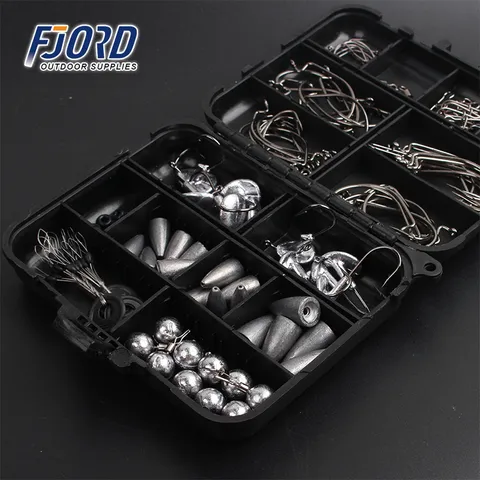
Fixed dividers are cheaper, resist rattling, and are the right choice when the box is sold for a defined purpose — a fly box, a hook box, a leader wallet. Adjustable dividers are what general retail customers expect, because they want to configure the box around the lures they already own.
If you sell adjustable, check two things: that the dividers stay seated when the box is carried, and that the wall grooves are deep enough to hold a divider under load. Dividers that pop out in transit are the loudest complaint in this category.
Material: PP, ABS and what humidity does to each
Polypropylene is the workhorse: light, chemically resistant, and it tolerates the flexing that drop-testing produces. ABS is stiffer and takes a better surface finish, which is why it is used where the box needs to look premium, but it is more brittle at low temperature. Translucent PP lids are worth specifying — being able to see contents without opening the box is a genuine selling point at retail.
Humidity is the quiet killer. In tropical markets, a box that seals well but never fully dries will grow mould on soft baits stored inside. Consider ventilation options or, at minimum, a note on the card about drying before storage.
Waterproof ratings and what they really mean
Waterproof is used loosely in this category. A splash-resistant box has a compression seal and a latch; a genuinely submersible box additionally has a gasket with a continuous compression path and, usually, multiple latches. If you intend to market a box as waterproof, get the rating defined in writing — the difference between splash-proof and submersible is a warranty question, not a marketing one.
What to confirm before you place the order
Confirm the material grade, the latch cycle-test result, gasket recovery, divider retention under load, and whether the box stacks with the other units in your range. Then order production-run samples loaded with actual tackle — an empty box hides almost every failure mode in this category.