Start with the steel, not the coating
Every supplier will tell you a tool is stainless. The useful question is which stainless. 420 stainless is the general-purpose grade: it takes an edge and costs little, but it will bloom in salt water without diligent rinsing. 440 stainless holds a better cutting edge and resists corrosion noticeably longer, which is why it is the usual upgrade for braid cutters and saltwater pliers. Carbon steel with a plating finish is the budget route and should be treated as a freshwater-only product.
Be sceptical of titanium-coloured coatings. A titanium nitride coating improves surface hardness and looks premium, but it is a coating — once it scratches, the substrate underneath is what corrodes. Titanium alloy bodies are a genuinely different product class, lighter and fully corrosion-proof, and they cost accordingly.
- Freshwater and general retail: 420 stainless is adequate and keeps the price competitive.
- Saltwater ranges: specify 440 stainless or a marine-grade alloy, and ask for the material declaration in writing.
- Do not sell carbon-steel tools into coastal markets — the first season will generate returns.
Jaw geometry decides what the tool can actually do
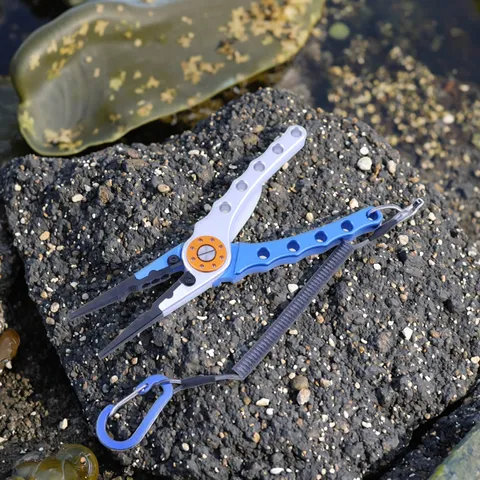
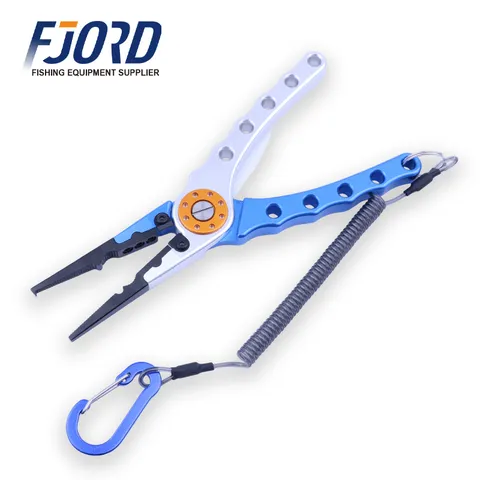
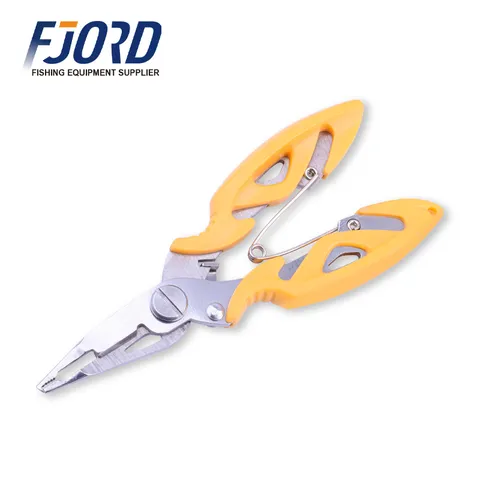
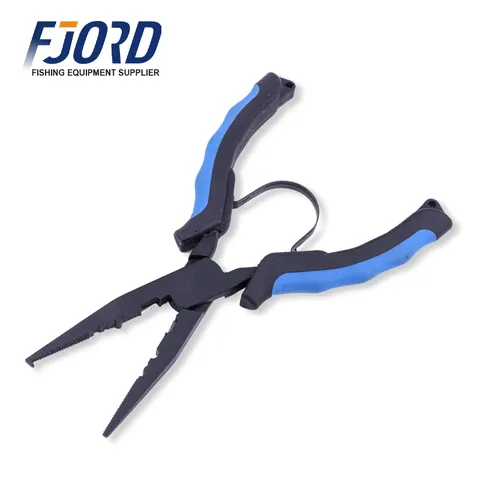
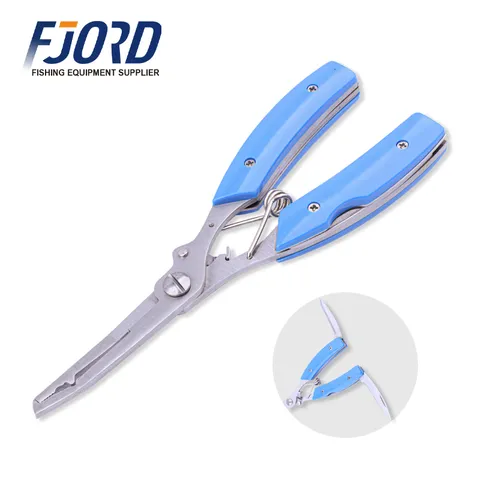
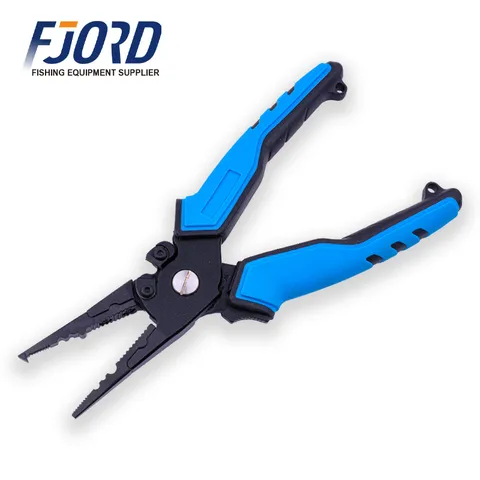
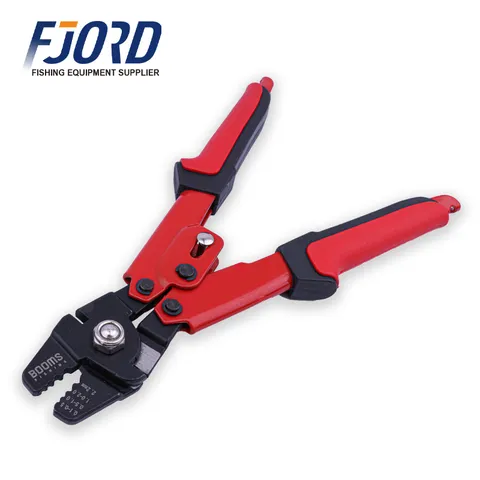
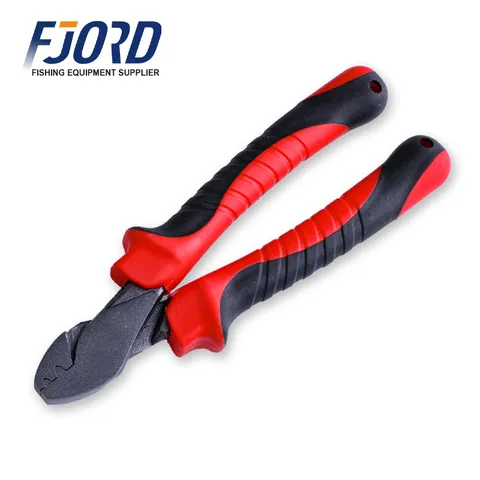
The jaws are the product. A split-ring tip, a crimper slot, a hook remover and a braid cutter are four different tools, and a plier that claims all four usually does two of them well. For a retail range, decide which two matter to your market and buy those properly: freshwater bass and pike anglers want a long-nose hook remover, while saltwater anglers want split-ring tips and a cutter that will actually part braid.
Braid cutters are the most common silent failure. Cutting modern braided line requires a hardened cutting edge and correct jaw geometry; a soft jaw folds the braid rather than cutting it, and the customer blames the shop. Always test the cutter on the braid your customers actually use, not on mono.
Corrosion: the saltwater test most suppliers skip
Corrosion almost never starts on the flat surfaces a photograph shows. It starts at the pivot, under the spring, and inside the jaw serrations, where salt sits and never dries. That is why two tools with identical steel can have completely different field life.
Ask the factory for a salt-spray test result measured in hours, and ask which failure criterion they used — surface discolouration and functional seizure are very different bars. A 24-hour result with no rust bloom at the pivot is a reasonable minimum for a saltwater line; 48 hours is the usual target for a premium range.
- Request salt-spray hours in writing, with the failure criterion stated.
- Inspect the pivot specifically — discolouration there precedes seizure.
- Build a rinse-and-dry instruction into the packaging; it halves the complaint rate and costs nothing.
Springs and grips: the parts that generate returns
On spring-loaded pliers, the spring is the shortest-lived component. Spring fatigue shows up as jaws that no longer open fully, and it is the single most common reason a tool comes back within a year. Ask what spring cycle test the factory runs and whether the spring is replaceable — a serviceable spring turns a warranty cost into a spare-parts sale.
Grip material is the second decision. Rubberised overmoulding feels secure with wet hands but degrades under UV and salt; hard moulded handles last longer and slip more. For cold-water markets, check the grip stays pliable at low temperature, because a handle that hardens in a Norwegian winter is a handle that gets dropped overboard.
Sheaths, lanyards and retail presentation
A sheath that cannot drain is a corrosion chamber. Insist on drainage holes and on a lanyard attachment point — tools are lost overboard far more often than they break, and a lanyard converts that loss into a retained customer.
For retail, the packaging decision mirrors the lure category: printed hang cards with the use case and material stated will outsell plain bulk packs in physical channels, while e-commerce private label usually wants bulk plus your own packaging. Include the steel grade and saltwater suitability on the card — those are the two questions customers actually ask.
What to confirm before you place the order
Confirm the steel grade in writing with a material declaration, the salt-spray hours and failure criterion, the spring cycle test result, and whether the braid cutter is tested on braid. Then request samples from the actual production run rather than pre-production samples — tools are assembled by hand at the pivot, and the sample-to-run gap is where most disputes start.